For a few weeks this spring, every commuter conversation at the Shoreline stations started the same way. Did you hear parking costs money now? The way people said it, you'd think Sound Transit had padlocked the garage and started charging admission.
Here's what actually happened. As of May 1, 2026, a slice of the Shoreline North/185th and Shoreline South/148th garages became reservable for a fee: $60 a month, $6 a day, or $20 a month if you already qualify for a reduced ORCA fare. Pay it, and your spot is guaranteed on weekday mornings between 4 a.m. and 10 a.m. Don't pay it, and you're back to the same first-come, first-served scramble that's existed since the Lynnwood Link extension opened in August 2024.
The part that got lost in the alarm: Sound Transit's own numbers show only 5 to 10 percent of garage users have actually signed up for a permit. The agency is capped by board policy at converting no more than 25 percent of any garage to paid parking, and it isn't close to that ceiling. For the overwhelming majority of people who park at either Shoreline station, nothing changed on May 1 except a new option they can choose to ignore.
The Garages, By the Numbers
Shoreline North/185th holds 360 parking stalls. Shoreline South/148th holds 500. Both have been running near capacity since the line opened, which is exactly why Sound Transit picked these two stations, along with Northgate, for the pilot in the first place.
| Station | Garage Size | Permit Window | Monthly Cost |
|---|---|---|---|
| Shoreline North/185th | 360 stalls | 4-10 a.m. weekdays | $60 ($20 reduced fare) |
| Shoreline South/148th | 500 stalls | 4-10 a.m. weekdays | $60 ($20 reduced fare) |
Outside that six-hour weekday window, every reserved spot reopens to the general public. Weekends and holidays, the permit system doesn't apply at all. Sound Transit's David Jackson has framed the goal less as revenue and more as churn, giving the agency a way to guarantee some turnover in garages that otherwise fill before the sun comes up.
The City Already Checked Your Street
If you live in one of the neighborhoods near either station and you're bracing for commuter cars to start colonizing your block, the city already looked into that. Shoreline's own Sound Transit Post Revenue Service Parking Impact Study, which measured on-street parking before and after the stations opened, found no significant spillover onto residential streets. No Restricted Parking Zones were recommended as a result. That's a rare piece of good news buried in a transportation report: the thing residents worried about most when the stations were first proposed didn't materialize.
The Real Question Isn't Cost. It's Whether You Need the Garage At All
The paid permit story only matters to people who were planning to drive to the station and park all day. A lot of Shoreline residents were never in that group, and the infrastructure built alongside the light rail extension is the reason why.
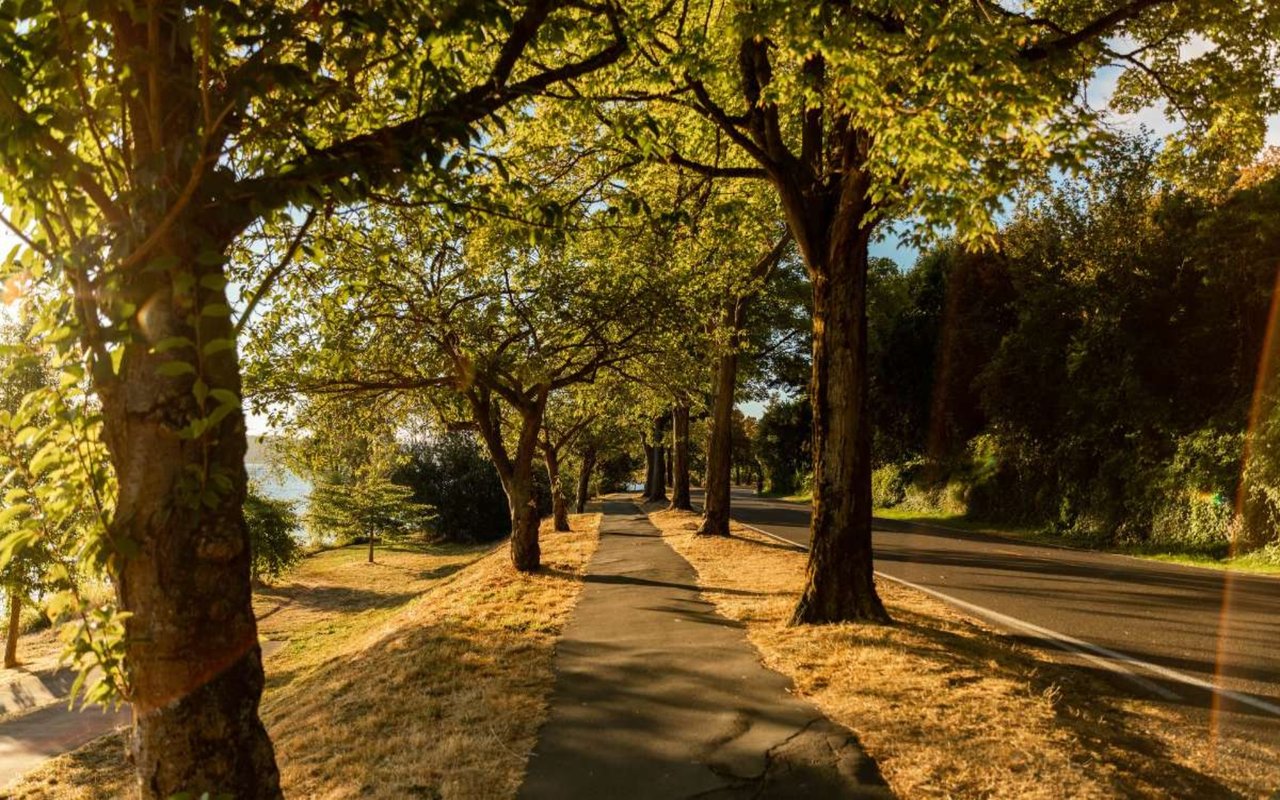
The Interurban Trail runs close to Aurora Avenue North through Shoreline, tracing the route of the old Seattle-Everett interurban railway that operated from 1910 to 1939. It won't drop you at the station door, but bike lanes on Northeast 185th Street and Northeast 155th Street were built specifically to close that last gap for cyclists heading toward the stations.
Closer to the tracks themselves, the city has been building something more direct. The Trail Along the Rail is a planned 14-foot-wide multi-use path running roughly parallel to the light rail line from Northeast 145th Street to Northeast 195th Street, designed to connect Ridgecrest Park and North City Park to both stations without needing a car at all. About 20 non-contiguous blocks of it were already built by Sound Transit as part of the original construction, and the city has completed pedestrian and bike improvements along 5th Avenue NE between 175th and 182nd to link into it. It's not finished, and it isn't meant to replace the Interurban Trail, but it's the piece of infrastructure most likely to matter if you live east of I-5 and want a car-free way to reach the platform.
For residents further from either station, the bus network changed meaningfully when Metro restructured routes alongside the light rail opening. Riders in Meridian Park who previously had to choose between a direct bus to the North station or a bus plus a 15-minute walk to the South station now have routes 333, 345, and 346 stopping directly at Shoreline South/148th. That's not a hypothetical convenience. It's the difference between a five-minute wait and a fifteen-minute walk, multiplied by every commute for the rest of the year.
None of this requires a permit. None of it requires waking up before 5 a.m. to beat the garage. It's just easy to overlook when the headline is about parking fees.
Who the Permit System Is Actually For
Strip away the noise and the paid permit program is solving a narrow problem for a narrow group: people who live too far from either station to walk, bike, or catch a direct bus, and who need a car to get there every single weekday morning. For that commuter, the old system meant leaving home earlier every month just to keep pace with everyone else doing the same calculation. The permit turns that daily gamble into a fixed cost.
If that's not your situation, the changes at Shoreline North and Shoreline South this year are close to invisible. Your neighborhood streets weren't quietly annexed into commuter parking. Your bus route either got better or stayed the same. And if you've ever considered the Interurban Trail or the emerging Trail Along the Rail as more than a weekend ride, this is the year those routes start pulling double duty as a way to skip the garage question entirely.
What This Says About Shoreline Right Now
The parking permit rollout is a small policy change, but it's a useful stress test for how a place actually functions once regional infrastructure lands in it. Shoreline got two brand-new light rail stations, a combined 860 parking stalls, and enough demand to fill them within the first year. What the city didn't get, according to its own traffic data, was the kind of neighborhood disruption that often gets predicted before these projects open. That's worth knowing whether you ride the train every day or never at all. It's the difference between a neighborhood that absorbed major infrastructure cleanly and one that's still working out the kinks two years in.
Shoreline has spent the past two years becoming a place where you genuinely don't need a car to reach downtown Seattle. The parking fee is a minor footnote to that story, not the headline.
If you're curious what else has shifted in Shoreline, or in any of the other South King County and Seattle-area neighborhoods we cover, Amber Arnall & Ian Gordon at Society Northwest keep a running account of the details that actually change daily life here. Discover your neighborhood, explore our guides, and see current listings when you're ready.