At just after 6 a.m. on February 4, Seattle Fire crews pulled up to the 120 block of North 36th Street to find flames burning in the crawl space under Petoskey's, the Midwest-themed sports bar that's spent eight years as the unofficial living room for every Vikings fan, Twins transplant, and homesick Wisconsinite in Fremont. The fire took about twenty minutes to knock down. Nobody was hurt. But the kitchen was gutted, and general manager Garrison Highsmith gave the news straight to the cameras that morning:
"We're closed. We're gonna be closed."
It was just days before the Super Bowl. Petoskey's has always been the spot where Fremont watches the big games, and that year it watched from somewhere else.
If you live in Fremont, you already knew some version of this. What's less obvious, and what's actually worth understanding if you've spent any Friday night on these blocks since, is what happened to the neighborhood's social calendar in the months after. A bar that had anchored one corner for the better part of a decade went dark with no firm return date. And the Fridays kept happening anyway.
The Test Was Whether One Bar Going Dark Would Take The Street Down With It
The damage at Petoskey's came in around $150,000, concentrated in the kitchen and the crawl space beneath it. Owner Joel Radin, a Minnesota native, described the stretch afterward in blunt terms: no firm timeline, a rebuild that would eat months, and a business sitting in limbo on a street that doesn't usually sit still. The bar and its staff launched a GoFundMe with a $50,000 target. As of late February, it had raised just over $7,400 from 85 donors, a modest number that says less about how much Fremont cares and more about how these things actually work: neighborhood support rarely shows up as one dramatic gesture. It shows up as $50 here, a shared post there, and neighboring businesses quietly picking up slack while the paperwork and permits grind forward. Fremont's own MyBallard coverage captured the stakes in the bar's own words:
"For the last 8 years, Petoskeys has served as Fremont's go-to sports bar, home away from home for Midwest transplants, and more than anything, as a place that feels like family amongst regulars."
That's a real loss for the people who treated that barstool as their own. But it's worth asking what a fire like this actually tests. Not whether one business can survive a $150,000 hit. Whether the neighborhood's identity depends on that one business surviving. Fremont's answer, over the six months since, has been pretty clear.
Fremont Fridays Was Never Built Around One Building
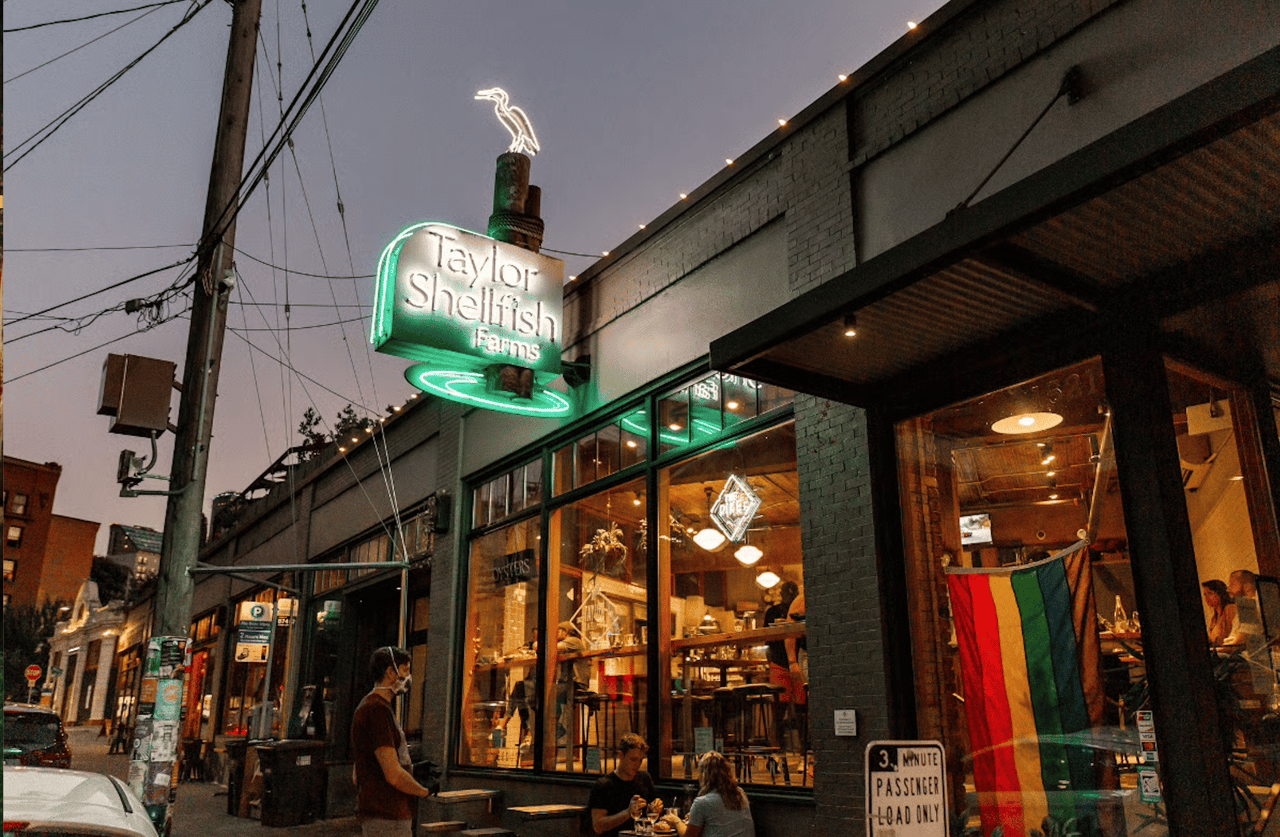
The clearest evidence is a few blocks away, at LTD Bar & Grill, where Fremont Fridays has run every week since late June without so much as a hiccup. This is the free, community-organized concert series that took over Fremont's Friday nights back in 2021, born when Marshall Hugh of the Marshall Law Band started rolling a converted parade float called The Jellybean through Seattle streets during the pandemic and eventually partnered with Mediums Collective to turn it into something permanent. Five years later, it's a twelve-week circuit running June 26 through September 11, pulling in more than 150 performing artists across a rotating list of stages: LTD Bar & Grill for live bands and silent discos, Add-A-Ball for late-night indoor sets, George & Dragon as the all-ages community stage, The Fremont Social for dinner-and-dance nights, Mermaid Lounge for community jams, West of Lenin for comedy and film, and The Cosmic Cottage as a standing house venue, with occasional pop-ups at Indoorsun, Hello There Handsome, and The Picklr.
Here's the part that matters for anyone trying to understand what actually keeps this neighborhood's nightlife running. Fremont Fridays was never anchored to a single bar. It was designed, whether by accident or necessity, as a distributed system, seven-plus venues sharing one calendar so that no single closure could take the whole thing down. When Petoskey's went dark in February, it didn't touch the Friday circuit at all, because the circuit had never depended on Petoskey's in the first place. That's not a coincidence worth glossing over. It's the actual load-bearing structure of how Fremont keeps its identity intact when one piece of it breaks.
You've got a handful of Fridays left this season if you want to catch it before the run wraps on September 11.
The Buildings That Used To Be Something Else
The same resilience shows up in how fast Fremont's storefronts turn over without leaving a gap. The old two-story Starbucks space, the kind of location that could easily sit dark for a year while a landlord shops for a national tenant, is now home to Moment, pouring matcha and espresso topped with flavored heavy cream and pairing it with a basque cheesecake menu that's earned its own following. A few blocks over, the administrative offices that used to sit behind Fremont Mischief Distillery have been converted into a walk-up espresso bar, the kind of place where you order through a sidewalk window under a pink neon glow, pulling shots from Ladro beans with house-made syrups.
Neither of these openings made national news. That's the point. Fremont absorbs turnover fast enough that most residents clock a new coffee counter before they ever notice the old sign came down. It's a small thing next to a bar fire, but it's evidence of the same pattern: this neighborhood doesn't leave holes. Something else moves in.
Sundays Still Belong To Whoever's Under The Bridge That Week
Zoom out to the weekly rhythm and you find the same structure at the market level. The Fremont Sunday Market has run under the Fremont Bridge every week, rain or shine, since 1990, drawing upward of 150 vendors selling everything from vintage clothing to flowers to the food trucks that regulars actually plan their Sundays around, Piroshky Piroshky among them. Like Fremont Fridays, the market isn't built around any one seller. Vendors rotate. Booths change hands. The market itself is the constant, not any individual stall inside it.
That's three separate rituals, Friday nights, Sunday mornings, and the storefronts in between, all structured the same way. None of them depend on a single operator staying open forever. All of them are built to keep running even when one piece drops out.
What This Actually Tells You About Living Here
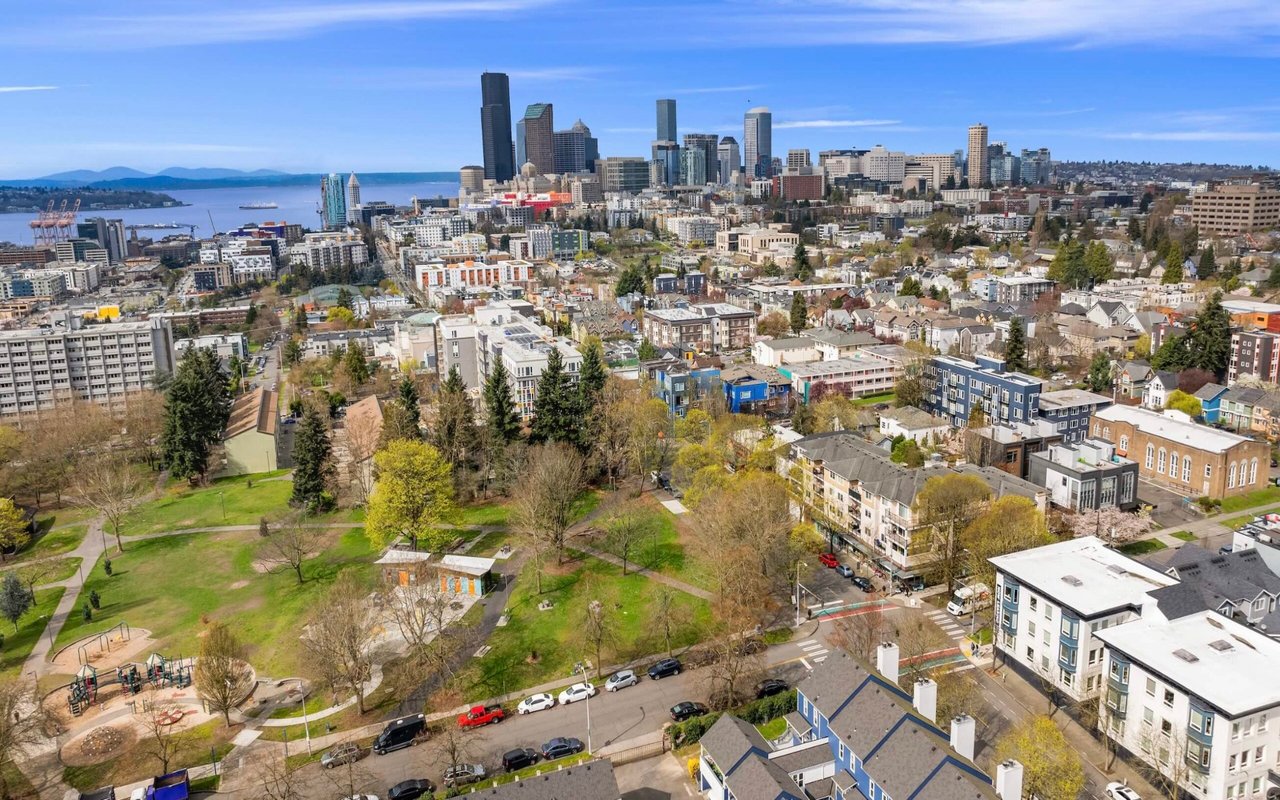
Fremont's reputation as the neighborhood with the concrete troll and the naked bike parade tends to get filed under quirky and left there. But the fire at Petoskey's is a better window into what actually holds this place together than any festival flyer. A business that mattered to a lot of people got knocked out for months, and the neighborhood's actual rhythms, the Friday circuit, the Sunday market, the fast churn of new coffee counters into old storefronts, never broke stride. That's not because nobody cared about Petoskey's. It's because Fremont's social infrastructure was never built to depend on any single address.
If you've lived here through this stretch, you've felt this without necessarily naming it. The neighborhood recovers from a loss the same way it handles everything else: distributed, redundant, and quick to fill a gap rather than dwell in it. That's worth knowing the next time a familiar storefront goes dark. In Fremont, it rarely stays that way for long, and the block around it almost never waits to find out.
If you're thinking about what it actually means to plant roots in a neighborhood built this way, Society Northwest spends its days in exactly these details. Come find your place in Fremont, and we'll show you the parts of it that don't make the tourist map.