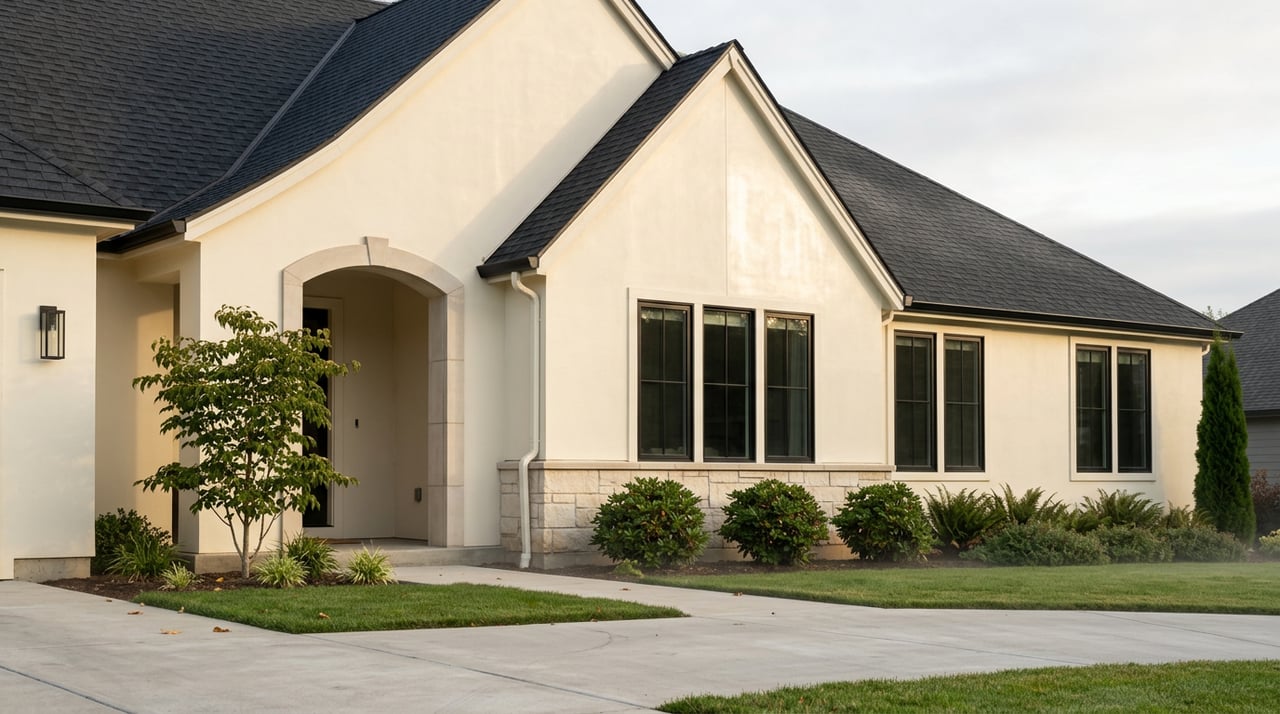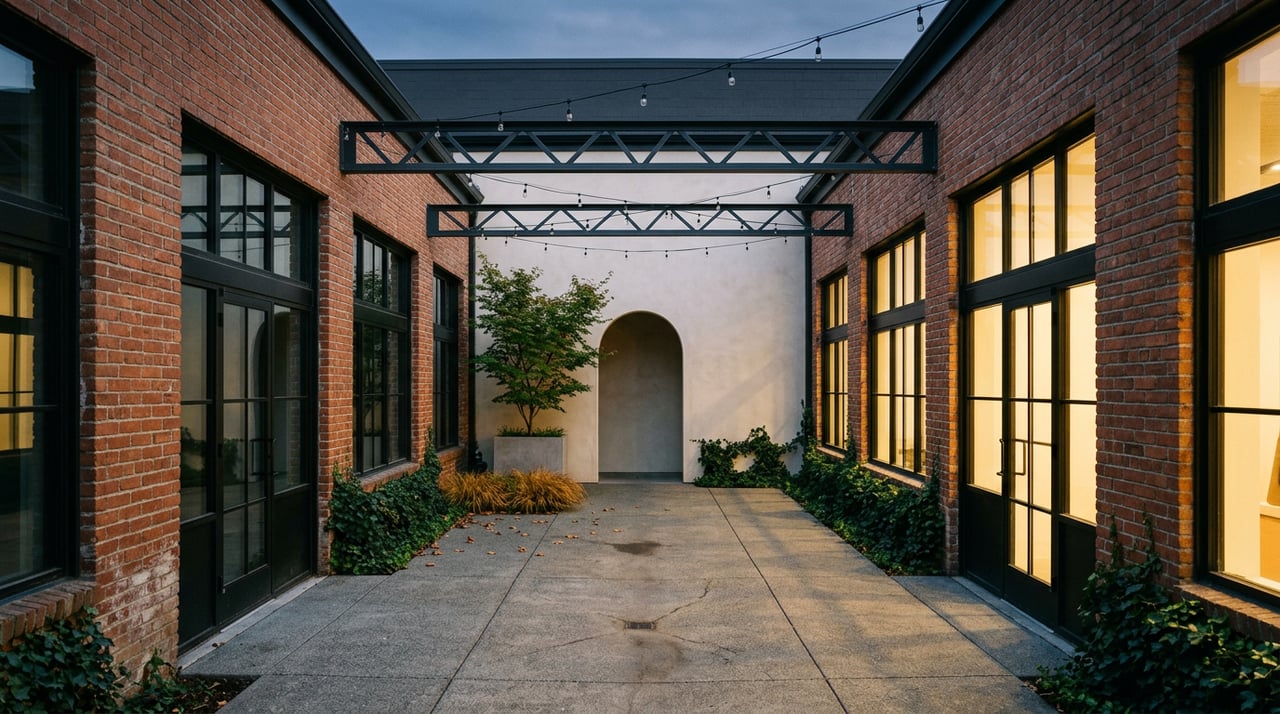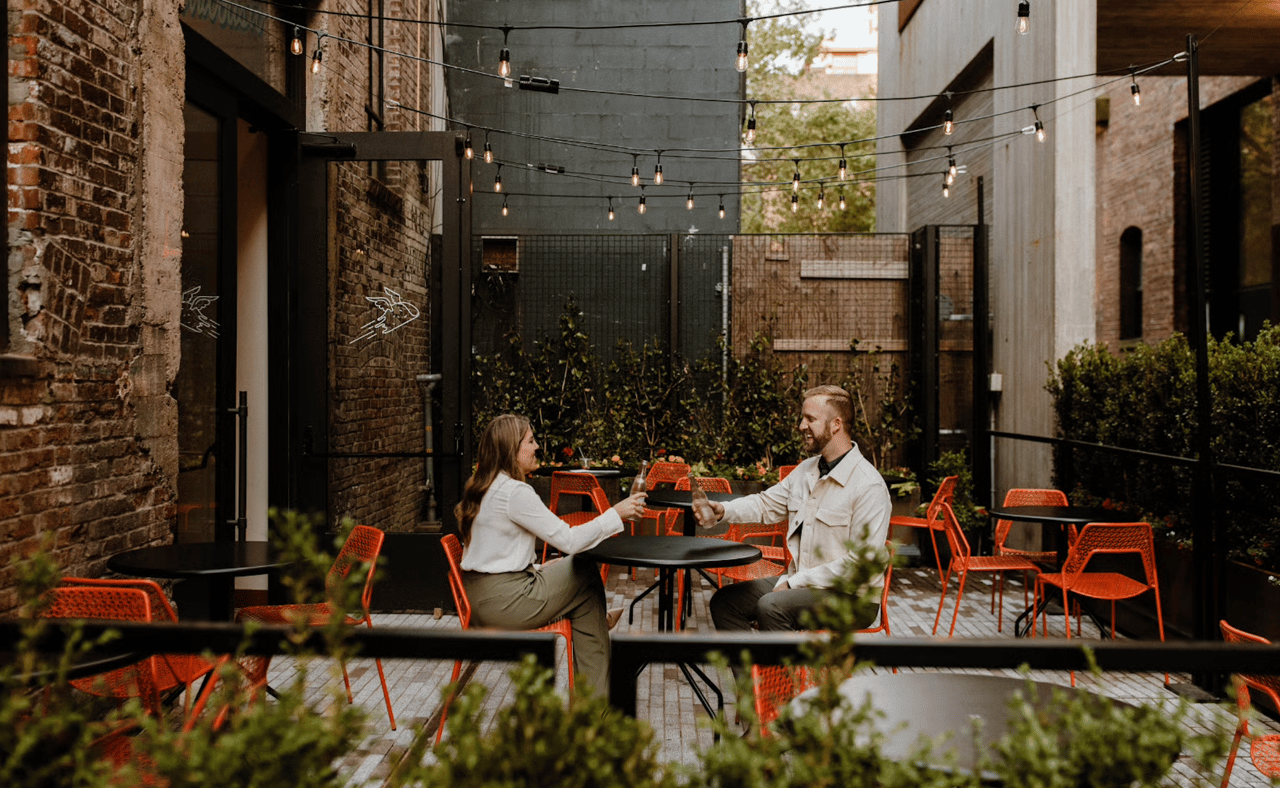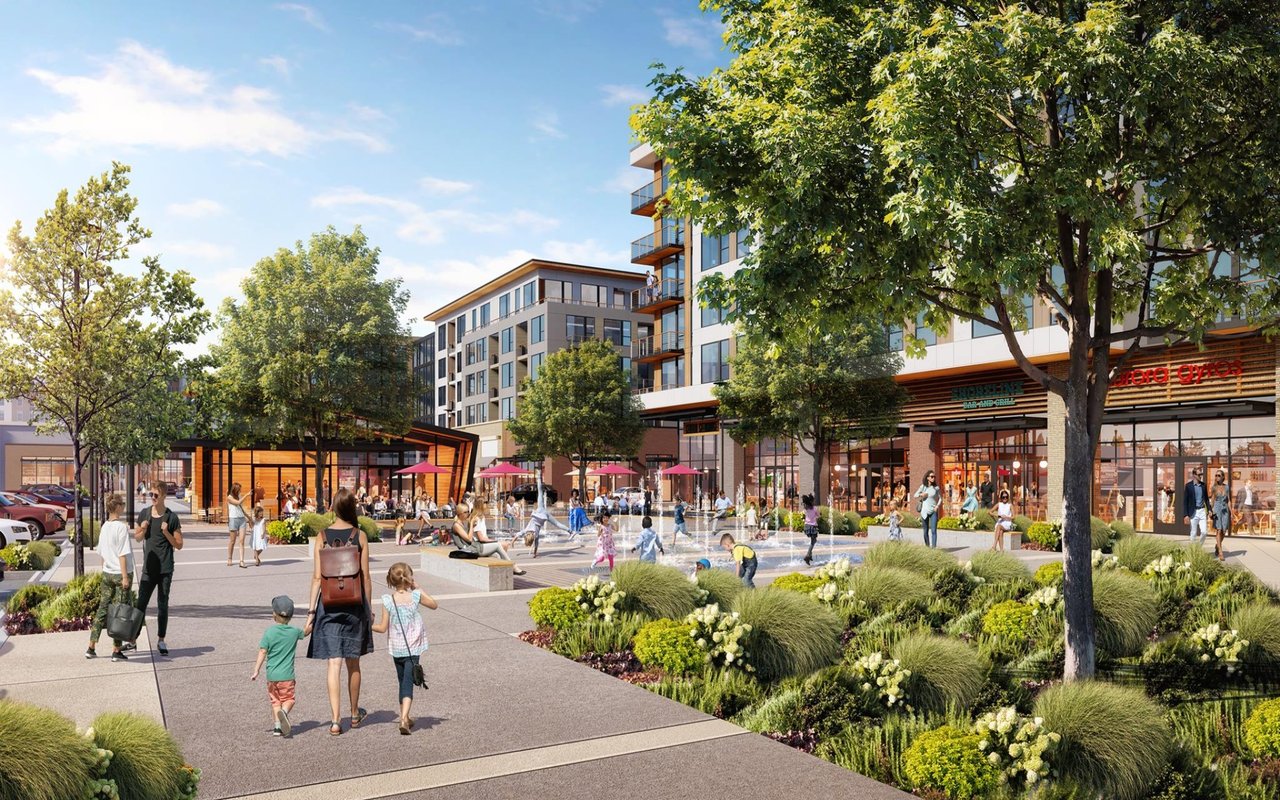
It was a Tuesday, not a Thursday, a little after seven in the evening, and the west end of Park Lane was still closed to cars. No band at Marina Park. No wine glasses. Just a couple splitting an order of fries at an outdoor table, a guy walking a dog around the planters where a traffic lane used to be, and three empty seats at Rimini that would fill within the hour. Nothing was happening. That was the point.
For years, the story of a summer evening downtown split into two separate rooms. You went to Marina Park for the concert or you went to Park Lane for dinner, and the two crowds mixed only in the ten minutes it took to walk between them. This year that walk disappeared. The street closure that used to be an event-night accommodation is now just how Park Lane operates on a random Tuesday, and four kitchens changed hands or opened outright in the same stretch of block. Put those two facts together and you get something residents who don't go downtown every week might not have clocked yet: Park Lane isn't hosting more events this summer. It became a different kind of street.
The Street Changed Before the Restaurants Did
The mechanism is easier to see if you separate the calendar from the pavement. Downtown Kirkland's outdoor dining program came back for its second full season on May 24, again closing the west end of Park Lane to cars every evening through the warm months, not just on concert nights or festival weekends. That distinction matters more than it sounds like it should. A once-a-week closure reads as an event. A nightly one reads as a redesign.
Here's what that shift actually changed on the ground:
| Last year's version | This year's version | |
|---|---|---|
| Street status | Closed for concerts and festival weekends only | Closed every evening, all season |
| Walk from lawn to table | A ten-minute detour around traffic | A continuous sidewalk with no car lane to cross |
| Kitchens on the block | Same operators as 2024 | Four with new ownership or brand-new concepts |
None of that shows up on a festival flyer. It shows up in the fact that a Tuesday now behaves like a soft version of a Thursday, because the street itself doesn't know the difference anymore.
Four Kitchens, One Stretch of Block
The restaurant turnover on Park Lane this year is dense enough that it's worth naming who's actually in each space, because the addresses tell you as much as the menus do.
Von's 1000 Spirits took over the former Feast space at 115 Park Lane, its second Eastside location and third overall, in a buildout of roughly 3,300 square feet within a five-minute walk of the water. The core menu carries over from the brand's other locations: sourdough pizzas, pastas, and the Signature Hamburgs the concept is known for, alongside a full spirits program.
Rimini, a new Italian restaurant from the Nardone family, opened on the same historic stretch of waterfront and reads as more of a sit-down reservation than a walk-in. On a concert night, it's the room to book if you want the view without competing for lawn space.
A few doors down, Tanaka Ramen took over the former Island Soul space in late January, bringing traditional Japanese ramen, rice bowls, and izakaya-style small plates to a corner of downtown that didn't have a fast, casual option between the park and the dinner tables. It landed on Yelp's list of Kirkland's best new restaurants within its first year.
The one longtime residents are actually watching, though, is The Slip. The waterfront burger spot, a fixture for nearly three decades, closed in September 2025 when its owner stepped away for health reasons. It reopened earlier this year under Ricky and Maria Eng, who also run BeachHouse Bar + Grill in Kirkland, after the Washington State Liquor and Cannabis Board approved the new liquor license, according to What Now Seattle's reporting on the transition.
As entrées downtown have crept toward forty dollars, The Slip's owner noted in a farewell post, the restaurant had quietly remained one of the last places in town where a full meal by the water still cost under twenty.
Whether the Engs hold that price point is the real local question of the summer, not whether the burgers stay good.
The Calendar Adds Volume, It Doesn't Cause the Change
It's tempting to credit the concerts and Kirkland Uncorked for the shift, and they did real work this summer. The Kirkland Downtown Association's free Thursday concert series has been running at Marina Park since July 9 and continues through September 3, with Eden opening the season, Groove Nation the following week, and Herding Cats packing the lawn on July 23 before Laurel Canyon Legacy carried the series into August. Kirkland Uncorked, the wine festival that turns the same park into a ticketed weekend, ran July 17 through 19 this year as a benefit for Motley Zoo Animal Rescue, a Redmond-based nonprofit that has placed more than 4,500 animals since 2009.
But the concert series will wrap on the same Thursday it always does, and Uncorked already packed up its tents weeks ago. What doesn't end is the street closure, and that's the part worth sitting with. The calendar gives the block its loud nights. The pavement gives it its ordinary ones. A resident who only shows up on a headliner Thursday sees a party. A resident who wanders down on a random Tuesday sees what the neighborhood actually looks like now, which is quieter, more walkable, and permanently rearranged.
Getting There Without Losing the Evening
The practical wrinkle is parking, and it gets tight fast on concert Thursdays, the way it did all through Uncorked weekend in July. The Cross Kirkland Corridor is the better approach if you're coming from the north end and don't mind arriving on foot or by bike. From the south, Lake Washington Boulevard tends to move better than fighting for a spot directly on the closed block. Neither route is a secret, but on a night when the lawn and the dinner tables are both full, knowing which way to come in saves the twenty minutes everyone else spends circling.
What Happens After Labor Day
The concert series closes its run on September 3, and Uncorked is long since packed away by then. The block will go quiet in the way downtown always does once the lawn chairs come in for the season. What won't revert is the street itself. The car-free evening closure is built as a season-long program, not a one-off accommodation, and the four kitchens that opened or changed hands this year aren't pop-ups. They're the new baseline. Next summer's concert series will still draw the crowds, but the room it draws them into will already exist, because this was the year Park Lane stopped needing an event to justify staying closed.
That's the kind of change that's easy to miss if you only measure a neighborhood by its headlines. If you've walked Park Lane on an ordinary Tuesday this summer, you've already seen it. If a friend is thinking about which part of the Eastside actually lives like this day to day, not just on festival weekends, that's a conversation Amber Arnall & Ian Gordon have on repeat. Discover your neighborhood, explore the current guides, and see what's actually happening on the ground before the next headline tells you.